Pixel-Art Game Assets on a 24 GB RTX 5090: Native T2I and I2I Workflows
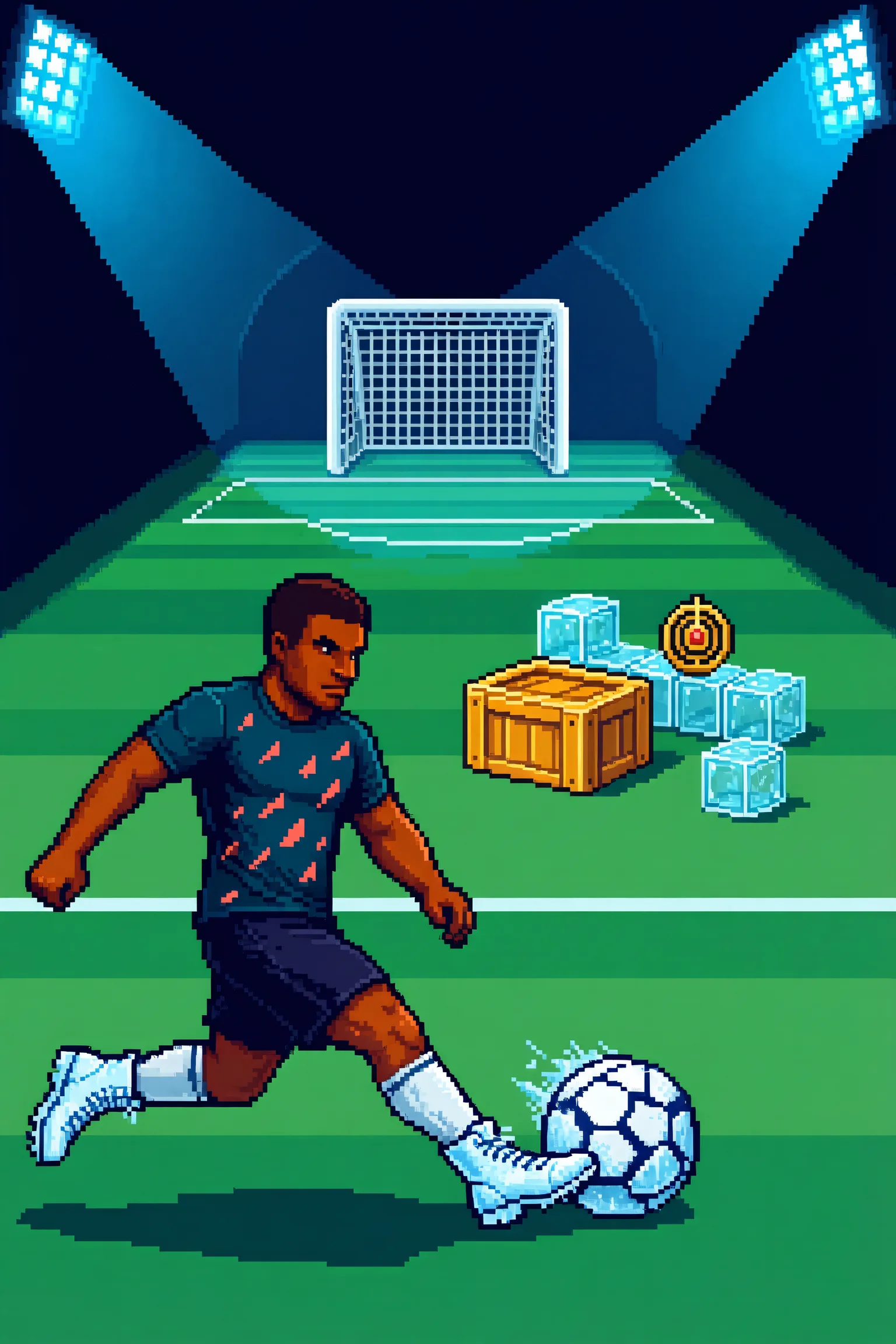
This is a production-oriented test, not a beauty contest. The scene comes from the visual contract for Kickshatter: Pixel Cup: one original fictional footballer, one ball, readable crate and glass obstacles, one goal, a small gold target, a night stadium, and deliberate hard pixel clusters. The image is useful only if an artist can turn it into a reviewed source reference; it is never dropped straight into the game.
The prompts were written in this Codex session from the game's asset and design contracts. The runs and visual review were performed in the same session. Every raw PNG, workflow, seed, wall time, peak VRAM value, and SHA-256 is retained in the managed benchmark receipt outside the public website.
The short answer
Qwen Image 2512 FP8 was the only model that delivered the complete playable pixel-art brief on both seeds. Z-Image Turbo was dramatically faster and useful for rough composition discovery, but its scene was simpler and less specific. Anima and FLUX.2 Klein produced attractive pixels in places, yet both missed the game contract often enough that neither is suitable as the default generator for this asset family.
| Model | Native workflow | Seed 42 | Peak VRAM | Pixel-game verdict |
|---|---|---|---|---|
| Qwen Image 2512 FP8 | Euler, 50 steps, CFG 4.0 | 218.373 s | 23,766 MiB | Best source-reference candidate |
| Z-Image Turbo BF16 | Euler, 9 steps, CFG 1.0 | 21.272 s | 23,342 MiB | Best quick exploration tool |
| Anima Aesthetic v1.1 | ER-SDE, 30 steps, CFG 4.0 | 31.789 s | 7,952 MiB | Rejected for this game brief |
| FLUX.2 Klein 9B Q8 | UniPC, 12 steps, FluxGuidance 3.5 | 52.666 s | 21,136 MiB | Rejected for this game brief |
All T2I samples used 1056 × 1584, two fixed seeds (42, 1337), no third-party LoRA, and the model's paired encoder and VAE. 1056 × 1584 is Qwen's documented 2:3 bucket; using an official bucket matters more than forcing an arbitrary benchmark canvas. ComfyUI's Qwen Image 2512 workflow
The scene contract
The test deliberately rejects common diffusion shortcuts: no player likeness, club, sponsor, flag, generated lettering, UI, watermarks, contact sheet, duplicate ball, or second goal. Pixel art must retain intentional hard clusters and survive nearest-neighbor resizing. The requested scene is one coherent game-key-art frame, not a runtime screenshot or a sprite sheet.
The acceptance dimensions were:
| Criterion | What passed |
|---|---|
| P1 — Pixel language | Hard square clusters, stepped edges, limited palette; no smooth-vector or photographic finish |
| P2 — Playable readability | Player, ball, obstacle material, target, and goal are readable at a glance |
| P3 — Safety | No text, logo, watermark, real-player likeness, flag, or duplicated core prop |
| P4 — Portrait utility | Complete silhouettes and a usable portrait crop |
| P5 — Repeatability | The second fixed seed still meets the same asset contract |
Native workflows and model-specific prompts
The point of the test was not to make four models obey one sampler preset. Each one kept its native topology and prompt method.
Qwen Image 2512 FP8
UNETLoader → Qwen 2.5-VL 7B FP8 encoder → Qwen VAE → EmptySD3LatentImage → AuraFlow shift 3.1 → Euler/simple, 50 steps, CFG 4.0
Original vertical 2D pixel-art key scene for a fictional football destruction puzzle. One adult player with warm brown skin and short dark hair wears a sponsor-free midnight-teal shirt with a small coral diagonal shard pattern, dark shorts, and ice-white boots. In the lower foreground the player strikes one ice-white football with navy seams toward an open white goal in the distance. Between them is one readable defence of amber crates, a few translucent cyan glass blocks, and one small gold crest target. Night stadium, deep navy tunnel background, cyan floodlight rim, restrained grass-green pitch. Deliberate hard square pixel clusters, stepped silhouettes, nearest-neighbour game-art readability, limited palette of ink navy, teal, coral, cyan, ice white, gold, and grass green. Portrait camera, all important silhouettes fully inside frame, one coherent playable scene, no interface or lettering.
Negative prompt: text, letters, numbers, logo, watermark, sponsor, flag, club crest, real player likeness, extra people, duplicate football, extra goal, UI, card frame, contact sheet, soft vector gradient, photorealistic rendering, blurry, malformed hands, malformed limbs, cropped subject.
Z-Image Turbo BF16
UNETLoader → Qwen3 4B lumina2 encoder → Flux AE → EmptySD3LatentImage → AuraFlow shift 3.0 → Euler/simple, 9 steps, CFG 1.0
A vertical original 2D pixel-art football destruction-puzzle scene: one fictional adult footballer in a sponsor-free midnight-teal and coral kit kicks one ice-white ball with navy seams through a readable small defence of amber crates and translucent cyan glass blocks toward one distant open white goal and one gold crest target. Deep navy night stadium, cyan rim lights, restrained grass-green pitch, deliberate hard square pixel clusters, stepped outlines, limited ink navy, teal, coral, cyan, ice-white, gold and green palette, clean portrait composition with every silhouette fully visible and no text or UI.
The negative prompt is empty. Z-Image Turbo is an eight-NFE distilled generation model with no CFG in its published Turbo table, so a conventional long-step, high-CFG negative-tag recipe would not be a meaningful native test. Z-Image's model table
Anima Aesthetic v1.1
UNETLoader → Qwen3 0.6B encoder → paired Qwen VAE → EmptyLatentImage → AuraFlow shift 3.0 → ER-SDE/simple, 30 steps, CFG 4.0
masterpiece, original 2D pixel-art football destruction puzzle scene, one fictional adult footballer, warm brown skin, short dark hair, sponsor-free midnight teal shirt, coral diagonal shard motif, dark shorts, ice white boots, one ice white navy-seamed football, amber crate defence, translucent cyan glass blocks, small gold crest target, one distant white goal, night stadium, navy tunnel, cyan rim light, grass green pitch, deliberate hard square pixels, stepped silhouettes, limited palette, portrait game key art, fully visible character and props
Negative prompt: text, lettering, number, logo, watermark, sponsor, club, flag, real player, extra person, duplicate ball, second goal, UI, frame, card, contact sheet, realistic photograph, 3D render, smooth vector, blur, malformed anatomy, cropped feet.
FLUX.2 Klein 9B Q8
UnetLoaderGGUF → Qwen3 8B encoder → FLUX.2 VAE → EmptyFlux2LatentImage → FluxGuidance 3.5 → UniPC/simple, 12 steps, sampler CFG 1.0
A fictional adult footballer in a midnight-teal kit with a coral diagonal shard motif strikes one ice-white football with navy seams through an amber-crate and cyan-glass defence toward one distant white goal and one gold crest target. Original 2D pixel game art with deliberate hard square clusters, stepped edges, crisp readable silhouettes, an ink-navy night stadium, cyan rim lights, a restrained grass-green pitch, and a portrait composition with the full player, ball, defence, target, and goal visible.
FLUX.2 has no negative prompt: it was given only desired visual facts. Its official guide recommends a Subject + Action + Style + Context structure and explicitly advises positive descriptions over negative prompting. FLUX.2 prompting guide
T2I evidence
Qwen Image 2512 FP8 — seed 42
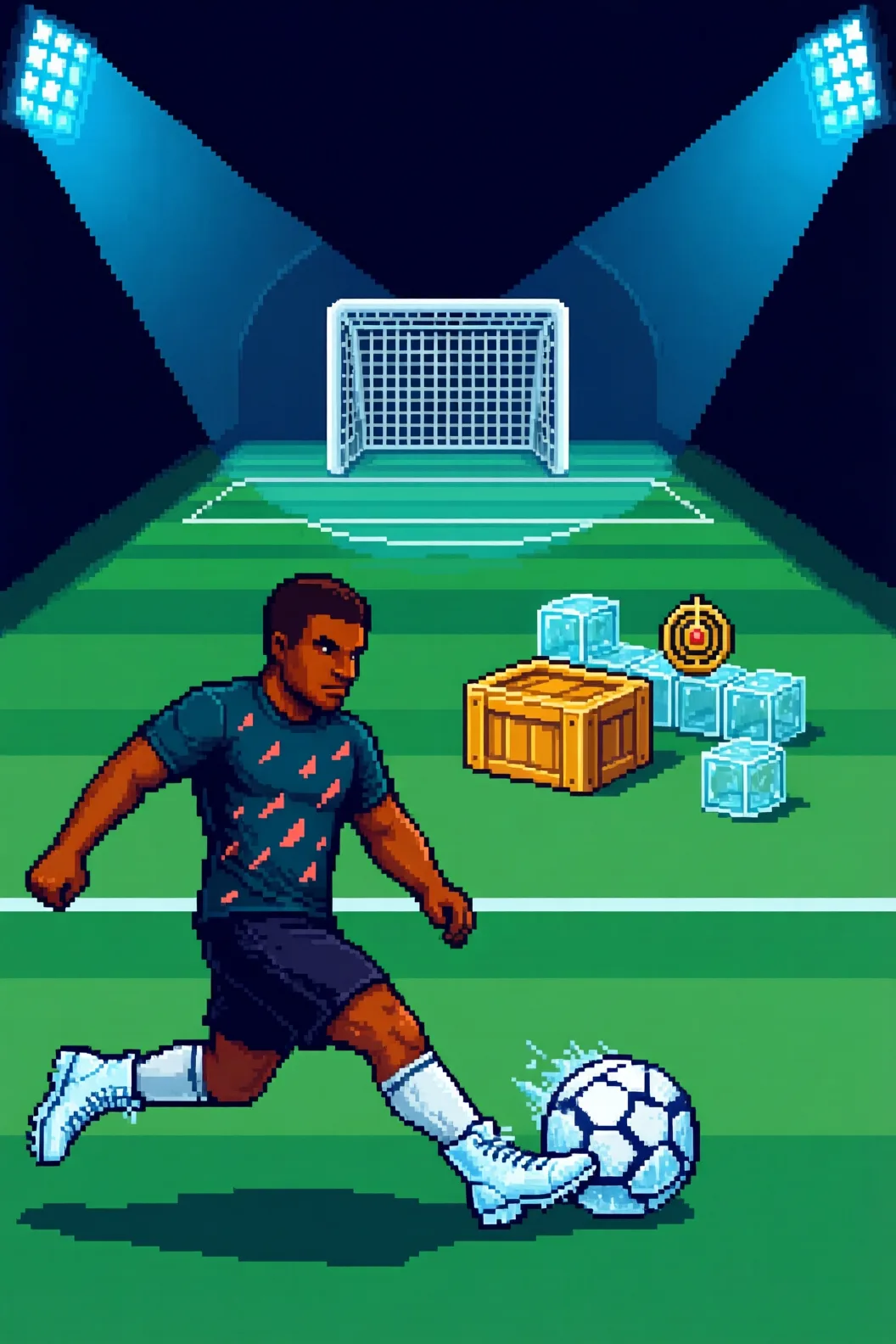
Qwen preserves the full action chain: a clear strike, one ball, a material-readable obstacle cluster, a target, and a goal. It is the only candidate that passes the scene as a source-reference candidate without changing the premise.
Z-Image Turbo BF16 — seed 42
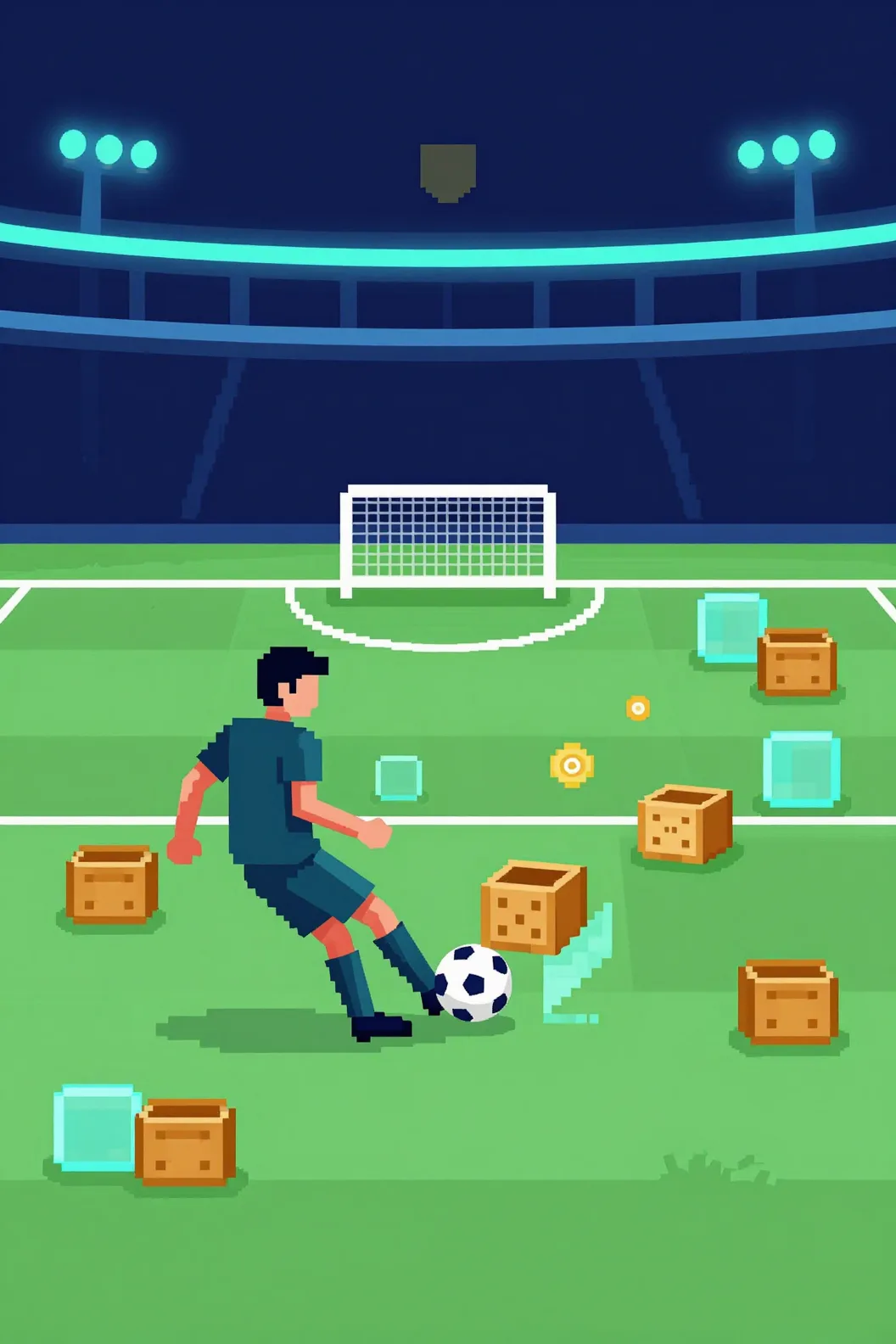
Z is clean, legible, and exceptionally quick. It simplifies the action and drifts from the requested kit and target language, so it is a thumbnail and composition explorer rather than the final source master.
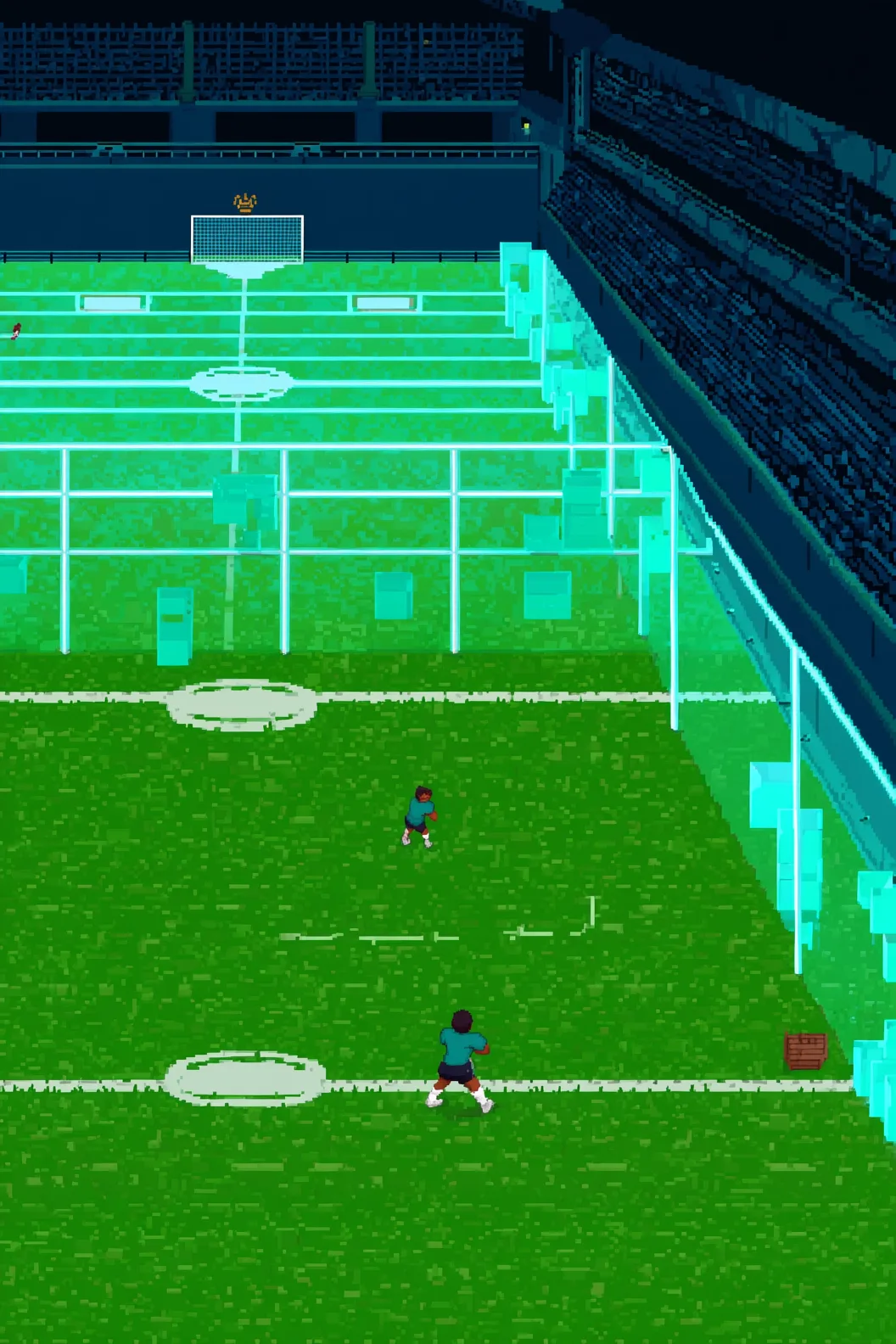
Anima Aesthetic v1.1 — seed 42
FLUX.2 Klein 9B Q8 — seed 42
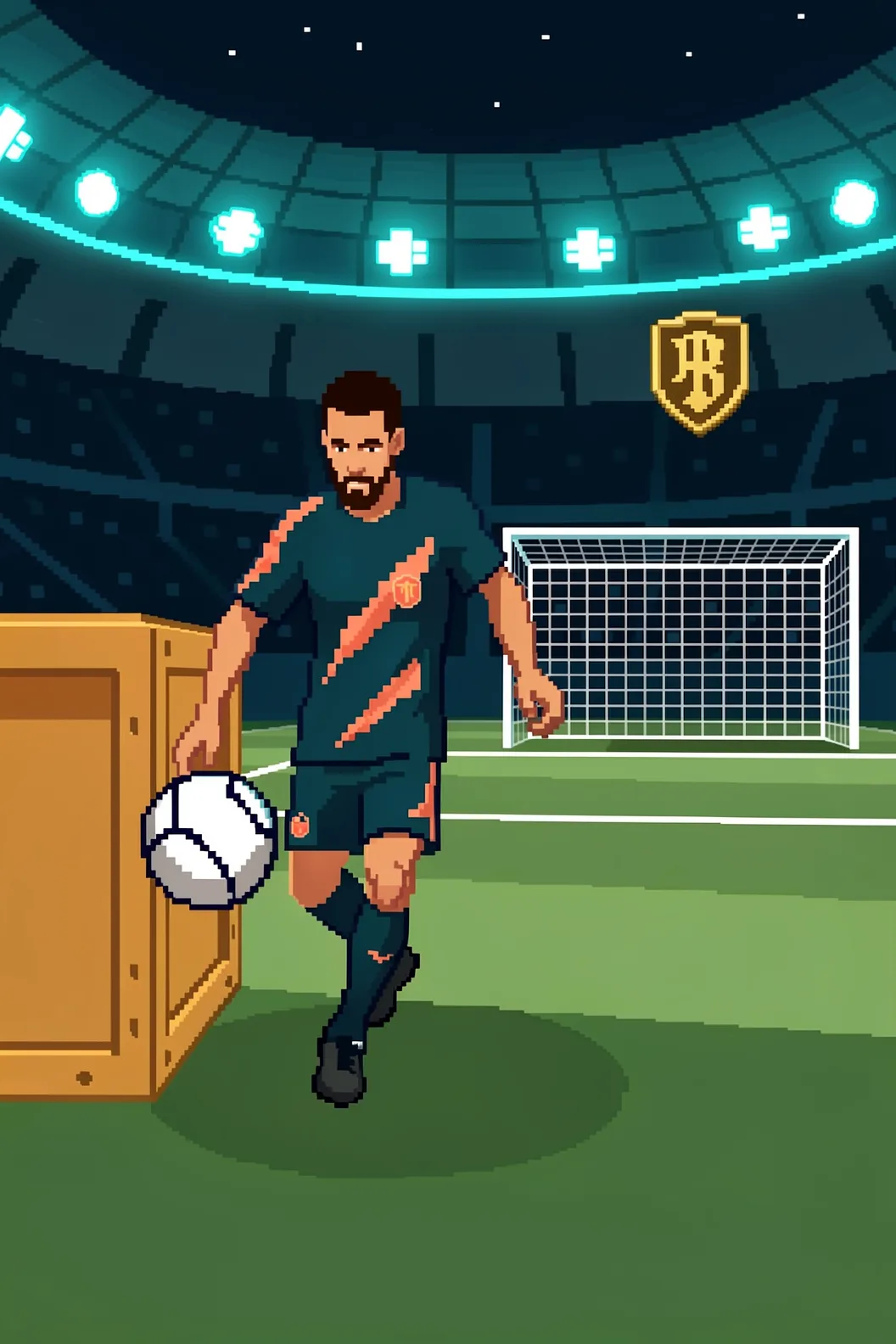
Anima turns the brief into a distant stadium layout, while FLUX changes it into a character-and-crate staging and creates a text-like badge. They demonstrate why a visually attractive frame is not automatically a usable game asset.
Visual scores
These are 1–5 visual-review scores for the actual files, not a general model leaderboard.
| Model | P1 | P2 | P3 | P4 | P5 | Decision |
|---|---|---|---|---|---|---|
| Qwen Image 2512 FP8 | 5 | 5 | 5 | 5 | 5 | Source-reference candidate |
| Z-Image Turbo BF16 | 4 | 4 | 5 | 4 | 4 | Exploration only |
| Anima Aesthetic v1.1 | 2 | 1 | 2–4 | 1 | 1 | Reject |
| FLUX.2 Klein 9B Q8 | 4 | 2 | 2–4 | 2 | 2 | Reject |
The ranges in P3 record the two different seed outcomes. Anima's second seed introduced a jersey number; FLUX's first introduced a text-like crest. Both are hard blockers for this asset brief.
Native I2I: Qwen Image Edit 2511
I2I is intentionally not forced into a four-model table. The installed Z-Image Turbo and Anima checkpoints have no native editing route in this stack; a generic VAE encode/decode graph would test a made-up workflow, not their intended capability. Qwen Image Edit 2511 was evaluated with its native reference-conditioning nodes and the paired Qwen encoder/VAE. Qwen describes this family as supporting image editing with semantic and appearance conditioning; its 2511 release also emphasizes material replacement and geometry-oriented editing. Qwen Image repository
The input was the game's original split-shield splash source, point-resized without distortion and padded to the native bucket. Both tasks used AuraFlow shift 3.1 · CFGNorm 1.0 · Euler/simple · 40 steps · CFG 3.0 · denoise 0.65.
I2I-A — preserve and strengthen the pixel treatment
Restyle image 1 as an original runtime-ready 2D pixel-art football destruction-puzzle backdrop. Preserve the exact football, split gold shield, distant goal, pitch perspective, stadium framing, and object positions. Strengthen deliberate hard square pixel clusters, stepped silhouette edges, readable material separation, and the existing ink navy, cyan, ice-white, gold, and green palette. Keep the image unlettered and free of interface elements.
I2I-B — change only the shield material
Keep image 1's exact football, split-shield silhouette, distant goal, pitch perspective, stadium framing, and every object position unchanged. Change only the split shield from opaque gold metal into translucent cyan glass with crisp faceted pixel highlights and a few matching cyan fragments. Preserve the original 2D pixel-art language, the dark night stadium palette, and the unlettered composition; do not add interface elements.



| Task | Seed 42 time | Peak VRAM | Preservation | Requested change | Finding |
|---|---|---|---|---|---|
| I2I-A pixel restyle | 318.525 s | 24,046 MiB | 5/5 | 2/5 | Essentially pixel-identical preservation |
| I2I-B gold-to-glass edit | 320.331 s | 23,957 MiB | 5/5 | 1/5 | The shield remained gold |
This is an honest, useful limitation. At denoise=0.65, Qwen Edit strongly protects the source but does not execute the material swap. For a production edit, the next test should isolate the shield with a mask or compare a higher denoise setting; it should not quietly replace this result with a new T2I reroll.
The controlled upscale stage
Each seed-42 T2I winner went through 4x-UltraSharp → Lanczos downscale to 2112 × 3168. The stage is separate from diffusion. It can improve delivery resolution and edge crispness, but it cannot fix an incorrect action, a forbidden emblem, or a missing target.
| Model | Upscale time | Peak VRAM |
|---|---|---|
| Qwen Image 2512 | 10.154 s | 21,198 MiB |
| Z-Image Turbo | 9.244 s | 12,176 MiB |
| Anima Aesthetic v1.1 | 8.147 s | 4,688 MiB |
| FLUX.2 Klein | 9.483 s | 16,720 MiB |
ComfyUI documents local ESRGAN-family workflows as an upscaling option, but this stage remains a finishing operation, not a way to invent trustworthy gameplay structure. ComfyUI upscaling guide
Recommendation
For this pixel-football asset family, use Qwen Image 2512 FP8 for the final 2D source master, accepting the roughly 3.5-minute, near-full-VRAM cost. Use Z-Image Turbo for fast composition selection, then remake the chosen scene in Qwen. Use Qwen Edit when preservation matters, but prove a localized change with a mask or an approved denoise comparison before trusting it. Do not choose Anima or FLUX.2 Klein as the default for this particular constrained scene.
Nothing here is a shipping asset yet. The next gate is a human review followed by nearest-neighbor cleanup and provenance recording; game UI, labels, numbers, icons, and live state remain authored in Godot.